1.1. About MIDNIMO Relief and Development Organization (MRDO) 9
1.2. Mission……………………………………………………………………………………………………………………..10
1.3. Vision………………………………………………………………………………………………………………………..10
1.4 Core Values…………………………….…………………………………………………………………………………10
3.1 MRDO’s Strategic Planning Context ………………………………………………………………………………..13
- MRDO Strategic Model – Forging a Path Towards Empowerment and Inclusion. 14
- Strategic Analysis. 14
- MRDO PESTEL Analysis. 18
- 7. Priority Themes. 21
- Goals, Objectives and Expected Outcomes. 22
- Organizational Structure and Operation: Nurturing Growth & Expansion. 26
9.1. Current Structure: Building a Strong Foundation. 26
9.2. Future Plan: Upcoming Structural Enhancements. 26
- Budget. 27
List of Figures
Table 1 – Strength and Opportunities 15
Table 2 – Strength and Implication. 16
Table 3 – Weakness and Implication. 17
Table 4 – Opportunities and Implication. 17
Table 5 – Threats and Implication. 18
Table 6 – Political Factors 19
Table 9 – Technological Factors 20
Table 12 – Strategic Objectiives 24
Acknowledgement
Statement: Minority and marginalized groups face significant hardships due to various barriers that hinder their progress. They lack representation and a voice to protect their interests, resulting in challenging living conditions and constant violations of their rights. They experience exclusion from decision-making processes and are marginalized in different aspects of life. Access to social services and education is often denied, and the absence of a national minority act exacerbates their struggles. High unemployment rates further hinder their ability to exercise their rights. Enacting and effectively implementing relevant national act and policies is crucial to empowering minority groups and enabling them to pursue their goals.
Expression of Appreciation: We express gratitude to the government of Somalia for their support, consultation, guidance, and recognition of our contributions. We are committed to maintaining our friendship and partnership with the government to navigate these obstacles and ensure the growth and well-being of the minority groups.
Acknowledgment of Development Partners: Our development partners, including the IOM, various government departments and others, have played a vital role as sources of financial and technical support in our previous strategic phase. We extend our appreciation for their assistance, which has enabled us to achieve significant milestones. We are dedicated to nurturing these friendships and partnerships in our new strategic phase, aiming to accomplish even more together for the minority groups.
Recognition of the Board of Directors: The Board of Directors has provided exceptional support throughout the previous strategic phase, demonstrating unwavering commitment in their oversight role and offering policy and strategic guidance. We intend to continue working closely with them to successfully implement this new strategic plan.
Request for Continued Collaboration: We value the contributions of our collaborators within the country, regionally, and globally. UN agencies, international non-governmental organizations (INGOs), local NGOs, the private sector, the public sector, and friends of MRDO have been instrumental in our growth. We sincerely request their ongoing partnership in this new strategic phase to further scale up our results and make a greater impact on the lives of minority and marginalized groups. We also appreciate the dedication and efforts of our staff, both at the Head Office and in the field offices, and look forward to their continued support in the coming years.
Expression of Gratitude: We express our gratitude to our friends and partners for their financial and other support, with a special acknowledgment of the technical and financial contribution from IOM-Somalia. Lastly, we recognize the invaluable leadership and guidance provided by the Strategy Consultant in developing this strategy plan. We appreciate his contributions in defining our strategic priorities for the future. This is a reviewed version of the Strategic Plan 2022-24.
Foreword
In 2003, we conceived the idea of collaborating with minority communities to create an inclusive community that values human rights, belonging, contributions, potential, and diversity of marginalized and vulnerable individuals. What initially seemed like a modest dream soon became a transformative reality as we witnessed the positive impact on people’s lives over the years.
The establishment of the MIDNIMO Relief and Development Organization (MRDO) was inspired by the efforts of its members within and outside Somalia. They believed in sharing their experiences and resources to support the development of minority and marginalized communities and groups across Somalia. In three years, MRDO built connections with local and international groups and embarked on projects that guided its trajectory for the next three years. We are proud of our achievements in all the regions of Somalia we have been working in, but we also acknowledge our untapped potential. Our main challenge now is to ensure continuity while driving transformative change.
This document outlines our strategic plan, serving as a roadmap for the next three years. Our focus will be on organizational development, raising awareness about human rights issues faced by minority communities and groups in Somalia, and promoting community development through partnerships. By adhering to this plan, we are confident that substantial progress will be made by 2026, creating a meaningful difference in the lives of minority communities and groups.
Acronyms
| AGM | Annual General Meeting |
| COVID-9 | Corana Virus Disease |
| CRPD | Convention on the Rights of Persons with Disabilities |
| CSOs | Civil Society Organizations |
| MO | Minority Organizations |
| GBV | Gender Based Violence |
| IDPs | Internally Displaced Persons |
| IEC | Information, Education and Communication |
| NGOs | Non-Governmental Organizations |
| PWDs | People with Disabilities |
| SDGs | Sustainable Development Goals |
| MRDO | MIDNIMO Relief and Development Organization |
| SWOT | Strengths, Weaknesses, Opportunities and Threats |
| TVETs | Technical and Vocational Education Trainings |
| UN | United Nations |
| USD | United States of America Dollar |
Executive Summary
In accordance with the strategic plan outlined for the next three years, spanning from January 2024 to December 2026, MRDO is fully committed to achieving its goals and strategies. This commitment will be realized through consistent monitoring, evaluation, and active collaboration from all members and partners. Despite potential challenges, the organization remains optimistic about successfully executing the planned tasks detailed in the strategies.
MRDO will actively collaborate with local and international partners, the Government of Somalia, private sectors, and international donors to provide implementation support to minority organizations and marginalized and vulnerable groups in various settings, including urban centers, rural areas, and IDP camps. The strategic plan provides a clear roadmap for the organization’s goals and strategic achievements over the next three years. MRDO will continue to enhance its services to minority members, marginalized and other vulnerable groups, following the outreach approach detailed in the plan
MRDO is guided by five primary objectives: eradicating discrimination against minority groups, addressing gender-based violence (GBV), alleviating poverty, and engaging in migration and development efforts. To support the expansion and sustainability of the organization, MRDO has established strategic goals for the next three years:-
- Strengthening Support for Minority Organizations and Marginalized and Vulnerable groups in Somalia: MRDO aims to enhance assistance and support for minority, marginalized and vulnerable groups in Somalia. This includes providing guidance, resources, and capacity-building programs to empower these groups in advocating for their rights and well-being. The organization seeks to strengthen the network of Minority organizations ensuring their sustainability and impact.
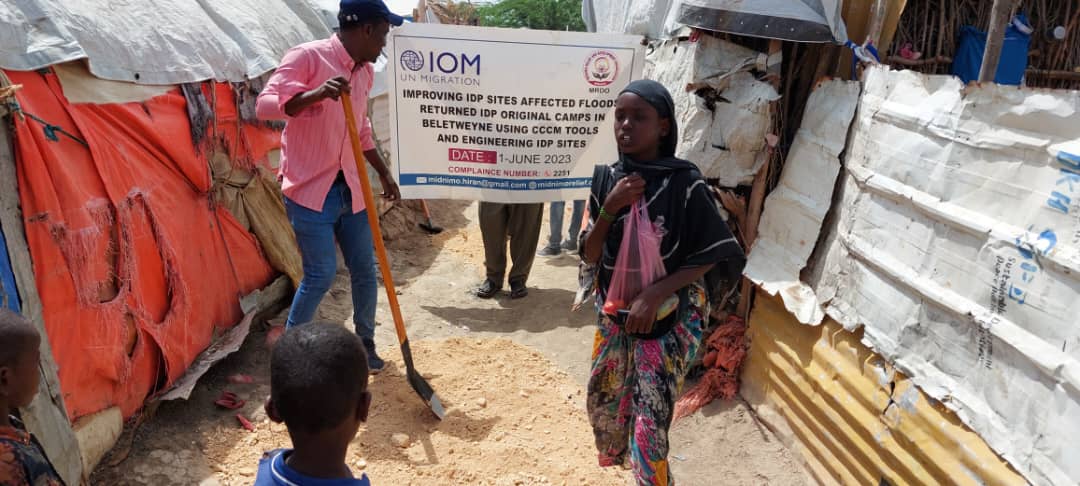
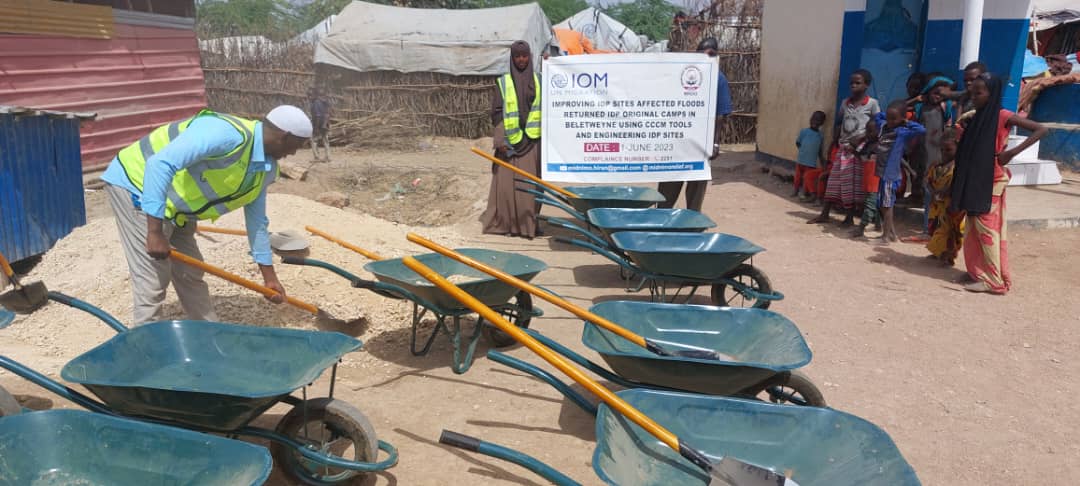
- Expansion of CCCM activities to riverine locations of minority groups in Somalia. MRDO aims to strengthen CCCM services and promoting minority inclusion in displaced and disaster affected communities in Hirshabelle as well as Objective promoting minority rights and inclusion through capacity building, awareness-raising, and data collection.
- Advocating for Inclusive Policies and Legislation: MRDO focuses on fostering inclusive policies and legislation that support the rights and inclusion of minority communities in Somalia. Through active engagement with policymakers, government institutions, and stakeholders, MRDO aims to influence the development and implementation of policies that cater to the needs and aspirations of minority groups. The goal is to create an enabling environment that promotes equal opportunities, accessibility, and social inclusion for all
- Promoting a Barrier-Free Society and Social Participation: MRDO is dedicated to creating a society where minority communities and groups can fully participate and contribute without facing limitations imposed by marginalization. This strategic goal involves raising awareness, altering attitudes, and nurturing a culture of inclusivity and acceptance. MRDO will work towards removing physical, social, and attitudinal barriers that hinder the full engagement of minority groups in various aspects of life, including education, employment, and community involvement.
- Establishing Effective Monitoring and Resource Mobilization Systems: Acknowledging the importance of monitoring and resource mobilization, MRDO emphasizes the need for efficient implementation of its programs and initiatives. The organization will establish robust monitoring systems to assess project impact, track progress towards goals, and identify areas for improvement. Additionally, MRDO will focus on mobilizing resources, including financial support, partnerships, and collaborations, to sustain and expand its activities in support of disabled communities.
To ensure the successful implementation of the strategic plan, MRDO will develop a comprehensive work plan based on a SWOT analysis. Advocacy efforts will encompass a protection program aimed at safeguarding the rights of PWDs and other vulnerable groups. Educational programs will empower minority, vulnerable groups, and communities. Vocational skills training will be provided to increase income and alleviate the fear of poverty.
Legal aid programs will protect them from unfair treatment, and the organization will initiate humanitarian aid programs in areas such as nutrition, human rights, education, gender-based violence and protection, livelihoods, shelter, emergency response, food relief distribution, and health services assistance.
This strategic plan encompasses all activities and tasks within the MRDO organization, supporting and assisting minority and vulnerable groups across all operational areas. The plan has been reviewed and approved by the Board of Directors, and it aims to expand the organization’s previous tasks and activities to other districts and regions throughout Somalia.
1.0 MRDO’s Introduction and Background
Midnimo Relief and Development Organization (MRDO) is a legally registered local development Minority organization working in Somalia specifically Hiraan region since its inception in the year 2003. The organization was established to respond and advocate for the minority communities problems in Hiraan region ranging from lack of access to essential basic social services in (health, education, water, sanitation and hygiene, (WASH) livelihood programs and human rights, etc).
MRDO implements Community Development programs in the areas of Health, Education, Human Rights, Peace Building and Reconciliation, Emergency and Disaster Relief mitigation alongside rehabilitation programs of collapsed infrastructures and institutions in Hiraan region. MRDO works with other local stakeholders and directly with target communities within its coverage areas in a participatory approach.
MRDO is an active member of Hiraan Clusters including CCCM/Protection, Health, Food Security, Cash Working Group (CWG), WASH and Education.
MRDO’s key areas of competency focuses on minority and marginalized communities’ right to peace, right to sustainable livelihood and development, right to protection and human rights, right to quality education, right to access to justice and right to political participation in all areas of Somalia in close collaboration and coordination with community members, national, international and UN organizations and Federal and State level government entities. The key thematic areas include, but not limited to:-
- Promotion and protection of fundamental and constitutional human rights
- Eradication of marginalization culture by the existing powers in Somalia through participatory approach and dialogue
- Strengthening communities’ resilience to shocks, tolerance and Peace through civic education and advocacy for equal opportunities and participation by all segments of the communities
- Influencing education system of the country for establishing primary, intermediate and secondary levels scholarships opportunities for the minority/marginalized children who cannot afford to go to school
- Establishing Vocational Training centers for providing technical capacity building trainings to small-scaled minority/marginalized businesswomen in the IDPs, returnees, urban and rural
- Camp coordination and mapping services
- Promoting good governance and improved public service delivery
- Engaging minority/marginalized youth for the state building, reconciliation and peace building efforts of the country.
1.1 Mission
MRDO mission is to promote, advocate and foster social, economical and political transformations amongst the minority, vulnerable, and the marginalized groups and communities in Somalia, in particular IDPs, youth, children, women, etc. towards protection, poverty reduction and economic development and inclusive political participation.
1.2 Vision
MRDO vision is to be a leading organization in championing peace in Somalia where all groups including the minority, marginalized and the vulnerable have access to basic and essential services.
1.3 MRDO’s Core Values
MRDO is a member-driven organization. The organization exists to maximize the resources of its members in accordance with the organization’s vision and mission statements.
While our intent is to serve the membership, we are aware that MRDO’s actions may have implications beyond the membership. In an effort to be thoughtful, careful and visionary about decision-making within MRDO we feel it is important to set forth the core values of the organization.
At MRDO, we have core operating values that influence the culture and public image of our organization as an effective community-based organization serving a wide variety of individuals.
Our core values include:-
- Respect to viewpoints: We recognize the importance of considering opportunity to all voices and opinions, including those that contradict our convictions.
- Respect of Rights of Women, Children and other vulnerable, marginalized and minority groups: We believe in deliberately strengthening the capacity of women and other vulnerable groups to meet their basic needs and to improve on their position; and have a strong commitment to the rights of the children.
- Courage of Conviction: MRDO believes in being creative and radical without fear of failure in pursuit of what we believe is in the course of human justice, equality and dignity.
- Fairness, equity and Justice: We strive to ensure that everyone, regardless of sex, age, race, tribe, class and religion, has equal opportunity for expression and for utilizing their unique potential.
- Institutional Integrity: MRDO emphasizes honesty, transparency and accountability to the bigger community and to our collaborative partners or otherwise; this is to instill the virtue in which we strongly believe
Our principles help guide us in what we want to achieve. Our work is focused on our three principles:-
- Positive Approach. We are a solutions focused organization. We want to hear what is working well and what is not working to approach the issues in a positive way.
- Promoting Equality. We are a proactive and media aware organization. We look to promote best practice and achieve a greater awareness of marginalization equality and accessibility across Somalia.
- Partnership-focused. We are a collaborative organization. We work with partners across all sectors to achieve real measurable change across Somalia with regard to access and equality.
2.0 Rationale and General Approach to this Strategic Plan
MRDO’s programs and projects are delivered through an empowerment model rather than simply a charity one. Such approach, we believe, is critical for a sustainable development. This is actually being well tested on our current projects in Somali while trying to support the independence of the marginalized and minority groups through advocacy and awareness creation, Lobbying, capacity building trainings and empowerment programs, legal aid assistance programs, and developing skills-based training programs.
MRDO is also involved in various sensitization and mobilization through partnership with other organizations and local groups. In the next three years, the organization will endeavour to expand and raise awareness, focus on establishing and supporting its members’ programs, develop local organizational capacity and strengthen its partnership and membership base. MRDO mode of operation is twofold – Prevention, through economic independence and capacity building and Intervention, through advocacy campaigns, emergency support, rehabilitation and integration.
Since our inception, the purpose of MRDO has been to help meet the needs of the marginalized, minority and other vulnerable groups’ within Somalia. As the needs and expectations of our communities have grown, so too have our own organizational capacities and expectations. Increasing demand for our services dictates that we reaffirm our mission and address fundamental questions such as, what objectives should we prioritize to make the best use of our skills and resources, what kind of organizational structure best allows us to fulfil our mission, and how should we best craft our identify and message to maximize understanding, effectiveness and sustainability.
To address these core questions, we put forth the following strategic plan to help define who we are and where we are going as an organization. In framing our strategic plan, we examine our organizational identity from several aspects. We look at who we are as a function of what our values and our historical roles have been, as well as what present day expectations are. We identify our primary programmatic initiatives and how we anticipate they will evolve. We review the characteristics and needs of the organizations we serve. We examine ways to structure ourselves to better serve our community. Finally, we identify key aspects of the organisation to enhance in order to meet the increasing needs of the stakeholders we serve.
3.0 MRDO’s Strategic Planning
Thoughtful planning will shape and guide an organization for the future. Its purpose is to help the organization do a better job, to focus its goals and to work together towards those goals. (Adapted from Bryson’s Strategic Planning in Public and Nonprofit Organizations.). In order to achieve this ideal, the Planning Committee, through thoughtful process and facilitated brainstorming, identified the following primary strategic questions:-
- Are the current activities of the organization assisting partners / members in maximizing resources and supporting the missions of their institutions? Should current activities be continued, expanded or abandoned? What, if any, new activities should be considered?
- Should MRDO actively pursue strategies that would widen the appeal of MRDO and increase multi type participation? What role should partners / members, both individual and group, play in MRDO? What effect would continued growth have on the administration of MRDO, the quality of the services provided and sense of community and camaraderie so important to the Organization and its members?
- How can communication be improved – both within the organization itself as well as with the various staff constituencies that comprise the driving force of our member partners?
- How can we assure the efficient and effective administration of the organization? If management vacancies occur, what policies and procedures should be implemented to ensure a smooth transition and minimize any loss of efficiency for the organization?
3.1 MRDO Strategic Planning Context
The struggle for minority / marginalized groups (women, children, youth, IDPs and other groups’) in Somalia takes place in a context where the abuse of human rights in general has persisted for decades, from the widespread torture and political oppression of the Siad Barre era to state collapse in 1991 and subsequent and ongoing civil war. Immense violations have affected all Somalis, majorities and minorities alike.
Majority groups, however, benefit from a traditional clan structure that has afforded them protection and privilege not available to minorities who regardless of the conflict, already suffered marginalization and exclusion from the mainstream economic, social and political life, thanks to a legacy of slavery, customary segregation, dispossession and displacement.
The clan structure of the majorities continues to exclude minorities from significant political participation and employment; limits their access to justice where abuse has been perpetrated against them or stand accused of a crime; denies them their rights to development, education, and sustainable livelihoods and prevents and punishes inter-marriage with members of majority groups.
The organization recognizes that the advancement of minority / marginalized rights is difficult in an environment of unending conflict, but it must not be continually postponed. We therefore proposes / makes the following recommendations among others:-
- The future new constitution of Somalia must specifically recognize equality and non discrimination in line with international human rights standards.
- Equal access to justice for women, children and other members of minority / marginalized groups should be ensured, including through public education and trainings to familiarize judges, police, prosecutors and defense lawyers with minority rights issues and standards and through their implementation in the justice system.
- Special measures should be implemented to protect and promote the rights of women and girl – child from minority communities who experience multiple discrimination on account of their gender and minority status.
- The international community should support expansion of the Somalia work of the office of the UN High Commissioner for Human Rights (UN OHCHR) to include a special programme for minority rights in conjunction with the role of the of the independent expert for Somalia, and support international; and regional action to promote Somali minority rights through inter-alia the UN-Human Rights Council and the African Commission on Human and Peoples’ Rights.
4.0 MRDO Strategic Model – Forging a Path Towards Empowerment and Inclusion
The Strategic Model employed by MRDO encompasses various key elements that shape its strategic direction and decision-making process. These elements include the Vision, Mission, Core Values, Key Strategic Issues, and Strategic Priorities. They have been meticulously developed through a comprehensive assessment of both the internal workings and external landscape.
Vision: The Vision statement encapsulates MRDO’s aspirations and long-term objectives, illuminating the organization’s desired future state. It serves as a guiding light, charting the course for MRDO’s endeavors and informing its strategic choices.
Mission: MRDO’s Mission statement outlines its fundamental purpose and role. It underscores the organization’s steadfast commitment to advocating for the rights and well-being of the minority communities and groups. The Mission statement encapsulates the core principles and activities undertaken by MRDO in fulfilling its mandate.
Core Values: The Core Values of MRDO represent the principles and beliefs that underpin its work. These values serve as a moral compass, influencing decision-making processes and shaping the culture and behavior of the organization. They include concepts such as inclusivity, equality, empowerment, respect, and dignity.
Key Strategic Issues: Identified through a comprehensive review and analysis of the internal and external environment, the Key Strategic Issues are the significant challenges or opportunities that MRDO must address. These issues may range from barriers to accessibility and discrimination to the lack of inclusive policies, limited resources, or gaps in service provision.
Strategic Priorities: MRDO identifies Strategic Priorities as the specific areas or initiatives crucial for achieving its mission and addressing the Key Strategic Issues. These priorities enable efficient allocation of resources, planning of activities, and implementation of programs. They signify the focal points of MRDO’s efforts to drive tangible change and make a meaningful impact.
5.0 Strategic Analysis
An analysis of the internal environment was carried out in order to identify factors within MRDO that may influence performance, implications and mitigation measures. The analysis is based on the assumption that an effective plan derives from a sound-fit between the internal resources and its external situation.
An analysis of the internal environment was carried out in order to identify factors within MRDO that may influence performance, implications and mitigation measures.
In summary, MRDO Strategic Model, comprising its Vision, Mission, Core Values, Key Strategic Issues, and Strategic Priorities, serves as a compass guiding the organization’s activities and strategic decision-making. It ensures that MRDO remains steadfast in its responsibility to advocate for the rights and promote the well-being of minority groups.
| Strengths | Opportunities |
| o Functional and adequately equipped physical office.
o Clear and well-defined mission, vision and goals. o Governance and operational policies and procedures in place. o Established good relationship with other CSOs and the government. o Visibility and recognition as an active member of several Networks in all the regions of Somalia. |
o Donors focus on inclusive interventions.
o Minority and inclusion are now captured in SDGs. o Goodwill from government for inclusive representation and financial support. o Active community role models among minority groups. o Peace and relative stability in Somalia o Availability of minority inclusive special needs school like for children with special needs. |
Table 1 – Strength and Opportunities
SWOT Analysis
In developing this strategic plan, an assessment of MRDO’s Strengths, Weaknesses, Opportunities and Threats (SWOT) was undertaken. This analysis provided a platform to determine appropriate plans and activities to ensure that MRDO’s objectives and goals are achieved. The SWOT analysis is based on the assumption that an effective plan derives from a sound-fit between the internal resources (Strengths and Weaknesses) and its external situation (Opportunities and Threats). The following is the SWOT for MRDO.
| Strengths | Implications | How do we enhance or maintain? |
| 20 years operational experience in advocacy and capacity building of minority groups, Promotion of participation in political and decision-making processes, human rights, children, women and youth empowerment, gender-based violence, etc. | This will strengthen MRDO’s profile within the region on inclusive manner for development matters. | Ensure there is impartiality in MRDO’s inclusion and advocacy practices. |
| MRDO Team of staff members have a contextualized knowledge & track record of delivery reporting of project successes. | MRDO will continuously be a source of quality output(s) in her work. | Ensure there is consistent adherence to quality protocols in media practices.
Continuous staff capacity building on emerging trends/laws/policies and guidelines governing the media practices in the region. |
| Regional presence / coverage-offices in more than three regions of Somalia. | This helps to boost MRDO confidence in the country and a sense of belongingness among the viewership for its beneficiaries and staff. | Ensure there are areas that specific has inclusive outputs to serve the different beneficiaries.
Ensure that all the legal requirements governing the organization’s operations in the country are adhered to consistently. |
| Strong community relations. | This helps in ensuring MRDO has good relations with the local communities which will go a long way in ensuring that there is support & sustainability of projects being undertaken. | Continuously ensure the local communities are involved in designing of community projects.
Ensure there is communication oncommunity-based projects progress to the members of the community. |
| MRDO has Strong social media presence. | This will help increase MRDO donors and authorities share and brand visibility. | Ensure online audience has access to MRDO activities, recruitments news and services at any given time.
Ensure there is staff dedicated at all times to address online customers’ issues for complains mechanisms. |
Table 2 – Strength and Implication
| Weakness | Implications | How do we eliminate or minimize? |
| Unclear communication channels from the Management to the rest of the staff | Leads to managerial challenges and performance inadequacies. | Develop a SNDF communication Guide/policy/manual to set in place. |
| Human Resources’ skills Gaps- Digital posting of opportunities, Research & development and Monitoring and Evaluation. | MRDO might not be able to cope up with the ever-changing Program with innovative environment. | Carry out HR skills gap mapping situation. Identify staff who can be capacity built to take some of the tasks identified as critical.
Hire/outsource key staff to fill in these skills gap at MRDO. |
| Technological inadequacies IT equipment, | Lack of the latest equipment makes it harder for MRDO to match up to the ever-changing media technological
environment leading to low quality production. |
Acquisition of latest computers and cameras and hiring IT to manages the changes. . |
Table 3 – Weakness and Implication
| Opportunities | Implications | How do we achieve or exploit? |
| The ever-expanding exclusion of Marginalized and Minority groups in social, economic and political participation, this gives us chance for our programming.
|
MRDO will have a great opportunity to expand its services and opportunities to ensure excluded groups are equally served in all existing projects and programs. | Ensure there is a targeted for Marginalized and Minority groups are equally included in all available services none is left behind. |
| The regional and national level presence in our operations | If well tapped, this can help thrust MRDO programmes and operations due to the already existing structures within Somalla.
|
Improve the structural strength within the regional offices/staff. |
| Technological advancements. | MRDO ought to embrace the technological advancements to be able to remain competitive in the respect of its project beneficiary’s donors and staff.
|
Ensure there is acquisition of latest social media production equipment including and not limited to cameras posting with organization updates and proceedings. |
| Accessible social media complain mechanism. | At the fold of the 21st century, it’s now quite evident that many people are accessing information online and as such, MRDO needs to ensure there is targeted improved online presence through the social media sites for increased viewership for organization
webpage.
|
Organizational capacity building on digitalization of reporting the concern and changes in programing. |
Table 4 – Opportunities and Implication
| Threats | Implications | How do we mitigate or avoid? |
| Stiff competition for resources from other civil society’s organizations. | Without proper strategies, MRDO might lose a significant share of its project plans to post for donor communities
|
MRDO should identify the niche in the market and use the “pare to principle” to deliver it. |
| Lack of sufficient funding / Financial resources. | Funds are a critical factor in any organization to succeed and as such without or with minimal funds; MRDO may not be able to achieve the strategic targets of 2024-2026.
|
Ensure there is targeted Resource Mobilization team and strategy in place. Develop a sustainability strategy.
Carry out donor mapping / intelligence.
|
| Political instability, corruption | During election circles, a lot of politicking is bound to happen and this tends to disrupt operations and brings a shift in the spending behaviors and money flow. | Planning with these disruptions in mind makes it easy for MRDO to maneuver the tides by ensuring that towards the elections the targets projected are on a normal
curve distribution to create a more practical scenario. |
Table 5 – Threats and Implication
6.0 MRDO PESTEL Analysis
External Environmental Analysis
The analysis of the external environment identifies factors outside the control of the organization that may affect performance positively (opportunities) or negatively (threats). The analysis was undertaken through a review of the Political, Economic, Social, Technological, Legal and Environmental (PESTLE) factors. The outcome of the analysis is as presented in the Table below.
- Political Factors
| Factor(s) | Implication to MRDO | Mitigation/ Enhance / Exploit |
| Political crisis determines changes of decision-making processes. | That can result delay of funding donor moving to other locations- lack political and decision-making process of minority and marginalized communities.
|
MRDO should work on strengthen their sustainable attaining their programming. |
| Delay of election determines Power challenges between the leaders can also determine the project processes. | Affect the organization sustaining her programmes and project. | Create local fundraising. |
| Change in leadership. New leadership comes with new environment. | Such change of political office will hamper operational movement. | Building new relation with the new leadership. |
- Economic Factor
| Factor | Implication to MRDO | Mitigation / Enhance / Exploit |
| Increase of local currency rate
Change. |
This will highly affect already ongoing projects. Accountability challenge.
|
MRDO with the support of local
communities fundraising and Diasporas |
| Reduction of donor’s funding’s lack of livelihood for and inclusion for minority and marginalized groups. | This will have a direct impact on reduced funding from the donor support that MRDO receives to implement projects/programs. | MRDO should come up with a sustainability plan that should include and create active fundraising committee to prepare a strategy to cope the situation.
|
| Micro-economic space | High rate of price in taxation from the authorities
|
Micro-economic space |
- Social – Cultural Factors
| Factor | Implication to MRDO | Mitigation / Enhance / Exploit |
| Increase of population
Communication barriers Lack of aid distribution for minority and marginalized communities. |
Consideration of vulnerable and Minority groups.
Involve with local communities inthe project area. |
MRDO – selects the key vulnerable people and minority groups and coordinating with the local authority in project implementation and successes |
| Covid-19 pandemic | Limits MRDO staff from movement and using measures to control the
pandemic. |
Organization applies all measures and guidelines for MoH. And WHO. |
- Technological Factors
| Factor | Implication to MRDO | Mitigation / Enhance / Exploit |
| Technologies in equipment, IT | Lack of quality control can Impact the project success. | MRDO Control all out going and posting information of the organization. |
Table 9 – Technological Factors
- Legal Factors
| Factor | Implication to MRDO | Mitigation / Enhance / Exploit |
| Lack of inclusive policy or law that protects minority and marginalized groups. | Difficult of getting legal documentation. Un–unified documents for all systems. | Advocacy to have unified documents in the system. |
| Lack of access to legal services for Minority and Marginalized groups. | Limits in reporting processes | Protect the safety of organization projects. |
Sustainable Development Goal (SDGs) that demonstrate MRDO’s areas of action and key priorities. The Sustainable Development Goals (SDGs), launched by the United Nations in 2015, are an excellent vehicle for driving change.
MRDO aims to contribute to the challenges of sustainable development by aligning our agenda to the SDGs, recognizing their strategic importance to our immediate society and the world. Additionally, we aim to work in a more integrated way to address the multiple and often intersecting vulnerabilities that people face in the poorest and most marginalized communities.
| Goal 4 on inclusive and equitable quality education and promotion of life-long learning opportunities for all focuses on eliminating gender disparities in education and ensuring equal access to all levels of education and vocational training for the vulnerable, including persons with disabilities. In addition, the proposal calls for building and upgrading education facilities that are child, disability and gender sensitive and also provide safe, non-violent, inclusive and effective learning environments for all.
|
|
| In Goal 8: to promote sustained, inclusive and sustainable economic growth, full and productive employment and decent work for all, the international community aims to achieve full and productive employment and decent work for all women and men, including for persons with disabilities, and equal pay for work of equal value.
Closely linked is Goal 10, which strives to reduce inequality within and among countries by empowering and promoting the social, economic and political inclusion of all, including persons with disabilities.
|
|
| Goal 11 would work to make cities and human settlements inclusive, safe and sustainable. To realize this goal, Member States are called upon to provide access to safe, affordable, accessible and sustainable transport systems for all, improving road safety, notably by expanding public transport, with special attention to the needs of those in vulnerable situations, such as persons with disabilities. In addition, the proposal calls for providing universal access to safe, inclusive and accessible, green and public spaces, particularly for persons with disabilities.
|
|
| Goal 17 stresses that in order to strengthen the means of implementation and revitalize the global partnership for sustainable development, the collection of data and monitoring and accountability of the SDGs are crucial. Member States are called upon to enhance capacity-building support to developing countries, including least developed countries (LDCs) and small island developing states (SIDS), which would significantly increase the availability of high-quality, timely and reliable data that is also disaggregated by disability. |
8.0 Goals, Objectives and Expected Outcomes
| STRATEGIC GOAL #1 | Enhancing Assistance to Minority Organizations, Minority, Marginalized and Vulnerable Groups in Somalia. | |
| Objectives | Activities/Strategies | Strategic Outcomes |
| Objective #1: Strengthening Organizational Capacity of Minority Organizations, minority, marginalized and vulnerable groups.
|
1.1. Conduct capacity building workshops and training sessions on topics such as strategic planning, project management, financial management, and governance for Minority Organizations. | Increased organizational effectiveness and efficiency of Minority Organizations in Somalia. |
| 1.2. Provide mentoring and coaching support to Minority Organizations to strengthen their leadership and management skills. | Enhanced leadership and management skills within Minority Organizations. | |
| 1.3. Facilitate networking events and platforms for Minority Organizations to foster collaboration, share best practices, and exchange experiences | Improved coordination and collaboration among Minority Organizations.
|
|
| Objective #2: Facilitating Access to Resources and Funding for Minority Organizations
|
2.1. Provide technical assistance and support to Minority Organizations in developing project proposals and accessing funding opportunities. | Increased financial sustainability of Minority Organizations. |
| 2.2. Conduct capacity building programs on resource mobilization, fundraising strategies, and financial management for Minority Organizations.
|
Improved access to resources, including grants and funding opportunities. | |
| 2.3. Facilitate partnerships and networking between Minority Organizations and potential donors, development agencies, and corporate sponsors. | Strengthened partnerships with donors, development agencies, and other stakeholders.
|
|
| Objective #3: Enhancing Advocacy and Representation Capacities of Minority Organizations | 3.1. Develop and implement advocacy campaigns to raise awareness about disability rights, inclusion, and accessibility. | Increased awareness and understanding of minority issues among key stakeholders. |
| 3.2. Provide training and support to Minority Organizations in developing effective advocacy strategies and engaging with policymakers. | Improved ability of Minority Organizations to advocate for the rights and needs of minority groups. | |
| 3.3. Facilitate dialogues and consultations between Minority Organizations and government officials to promote the inclusion of minority perspectives in policy and decision-making. | Enhanced representation and participation of Minority groups in decision-making processes. | |
| STRATEGIC GOAL # 2 | Expansion of CCCM activities to riverine locations of minority groups in Somalia. | |
| Objective #1: Strengthening CCCM services and promoting minority inclusion in displaced and disaster affected communities in Hirshabelle. | 1.1. Conduct regular assessments in IDP sites. | Informed decision made based on assessment findings |
| 1.2. Engagement and capacity building of Camp
Management Committees (CMC) |
Strengthened capacities of CMCs. | |
| 1.3. Manage and strengthen the existing
Complaints and Feedback Mechanisms |
Strengthened CFMS. | |
| 1.4. Gu / Flood mitigation and flood
preparedness activities through community engagement and site maintenance activities |
Increased awareness on protection issues related to El Nino response, prevention and mitigation through open forum/meetings. | |
| Objective #2: Promoting minority rights and inclusion through capacity building, awareness-raising, and data collection. | 2.1. Development and capacity building training
of minority champions |
Increased awareness on protection issues related to El Nino response, prevention and mitigation through open forum/meetings. |
| 2.2. Awareness-raising sessions on minority rights
and inclusion. |
Strengthened capacities of minority groups. | |
| 2.3. Data collection on minority groups’ experiences
and issues to inform evidence-based programming and advocacy efforts |
Minority inclusion and issues promoted. | |
| STRATEGIC GOAL #3 | Fostering Inclusive Policies and legislations supporting minority communities in Somalia. | |
| Objective #1: Influencing Policy and Legislative Frameworks to Promote Minority Rights | 1.1. Conduct research and analysis to identify gaps in existing policies and legislation related to minority groups’ rights. | Improved policy environment that supports the rights and inclusion of minority groups. |
| 1.2. Advocate for the development and adoption of minority-inclusive policies and legislation through engaging with government officials, policymakers, and relevant stakeholders. | Enactment and implementation of minority groups’ -friendly legislations and regulations. | |
| 1.3. Engage in advocacy efforts to raise awareness among policymakers about the need for inclusive Policies
|
Adoption and implementation of policies that promote the rights and inclusion of all individuals, including people with disabilities | |
| 1.4. Collaborate with government agencies and other stakeholders to develop and promote inclusive policy frameworks, guidelines, and action plans | Improved coordination and collaboration between government agencies, civil society organizations, and other stakeholders in the development and implementation of inclusive policies | |
| Objective #2: Strengthen the capacity of government institutions to develop and implement inclusive policies.
|
2.1. Provide training and capacity-building programs for government officials on minority rights, inclusive policy development, and implementation. | Enhanced knowledge and skills among government officials on minority rights and inclusive policy development. |
| 2.2. Support the establishment or enhancement of institutional structures and mechanisms for minority-inclusive policy-making. | Improved institutional mechanisms and processes for policy development, implementation, and monitoring. | |
| 2.3. Facilitate dialogues and partnerships between government institutions and minority organizations to ensure the inclusion of diverse perspectives in policy development processes. | Increased collaboration between government institutions and minority organizations in policy formulation and implementation | |
| Objective #3:
Monitor and evaluate the implementation of inclusive policies and advocate for their effective enforcement.
|
3.1. Develop monitoring and evaluation frameworks to assess the implementation of inclusive policies and identify gaps or challenges. | Regular monitoring and evaluation of policy implementation to assess progress and identify areas for improvement. |
| 3.2. Advocate for the establishment or strengthening of mechanisms for monitoring and reporting on the implementation of inclusive policies. | Enhanced accountability mechanisms to ensure the enforcement of inclusive policies. | |
| 3.3. Conduct public awareness campaigns to educate citizens about their rights and empower them to advocate for the effective enforcement of inclusive policies. | Increased public awareness and engagement in holding government accountable for the implementation of inclusive policies. | |
| STRATEGIC GOAL #4 | Promoting a Non-Minority Society and Social Participation | |
| Objective #1:
Raise awareness and educate the public about marginalization and the rights of people with minorities. |
1.1. Develop and implement awareness campaigns to promote a better understanding of minorities and address misconceptions. | Increased understanding and knowledge among the general public about marginalization and the challenges faced by minority groups. |
| 1.2. Conduct workshops, seminars, and training sessions to educate various stakeholders, including the public, employers, and educators, on minority rights and inclusive practices. | Reduced stigma, stereotypes, and discrimination towards IDPs, women, people with disabilities. | |
| 1.3. Collaborate with media outlets to disseminate accurate and positive information about minorities and share stories of individuals with minority members who have achieved success. | Improved support and acceptance for the inclusion of minority groups in all aspects of society. | |
| Objective #2:
Foster a supportive and inclusive environment for minorities to actively participate in society. |
2.1. Advocate for the implementation of accessibility standards and regulations in public spaces, transportation systems, and digital platforms. | Increased accessibility in physical environments, transportation, communication, and information for minority groups.
|
| 2.2. Collaborate with businesses, educational institutions, and community organizations to promote inclusive practices and provide reasonable accommodations for people with disabilities among other minority groups. | Enhanced opportunities for minority groups to engage in social, recreational, educational, and employment activities. | |
| 2.3. Organize inclusive events, sports activities, and cultural programs that encourage the participation and social integration of minority groups. | Strengthened networks and partnerships with organizations and stakeholders working towards social inclusion. | |
| Objective #3:
Promote attitudinal change towards marginalized and minority groups and foster a culture of inclusion. |
3.1. Develop and implement campaigns that challenge stereotypes, promote positive images of IDPs, Women, people with disabilities, and highlight their contributions to society. | Shifted attitudes and perceptions towards minority groups such as IDPs, people with disabilities, recognizing their capabilities and potential. |
| 3.2. Conduct sensitization and awareness sessions for various groups, including schools, workplaces, and community organizations, to address biases and promote inclusive attitudes. | Increased empathy, respect, and support for the rights and needs of minority groups. | |
| 3.3. Engage in advocacy efforts to influence policies and practices that promote equal rights, opportunities, and social inclusion for minority groups. | Encouragement of active engagement and meaningful inclusion of people with disabilities in decision-making processes. | |
| STRATEGIC GOAL #5 | Implementing Effective Monitoring and Resource Mobilization | |
| Objective #1:
Establish a robust monitoring and evaluation system to track the progress and impact of programs and projects.
|
1.1. Develop and implement a comprehensive monitoring and evaluation framework, including performance indicators, data collection methods, and reporting mechanisms. | Enhanced accountability and transparency in the organization’s activities and use of resources. |
| 1.2. Conduct regular monitoring visits and data analysis to assess the implementation of programs, identify gaps, and measure the achievement of targets. | Improved decision-making through timely and accurate data on program effectiveness and outcomes. | |
| 1.3. Utilize feedback mechanisms and stakeholder consultations to capture qualitative insights and incorporate them into program adjustments and improvements. | Strengthened learning and adaptive management to optimize program delivery and achieve desired results. | |
|
Objective #2: Increase resource mobilization efforts to secure sustainable funding for the organization’s activities.
|
2.1. Conduct a thorough assessment of existing and potential funding sources, including grants, partnerships, and fundraising opportunities. | Diversified and expanded funding sources to support the organization’s initiatives and long-term sustainability. |
| 2.2. Develop and implement a resource mobilization strategy, including targeted outreach, proposal development, and donor engagement. | Strengthened partnerships with donors, philanthropic organizations, and government agencies for resource mobilization. | |
| 2.3. Cultivate and maintain strong relationships with donors and funding agencies through effective communication, reporting, and accountability | Improved financial stability and capacity to deliver impactful programs and projects. | |
|
Objective #3: Build internal capacity and expertise in monitoring and resource mobilization.
|
3.1. Provide training and professional development opportunities for staff members on monitoring and evaluation methodologies, data analysis, and resource mobilization strategies. | Enhanced skills and knowledge of staff members in monitoring, evaluation, and resource mobilization techniques. |
| 3.2. Establish clear guidelines and protocols for financial management, grant applications, and reporting to ensure compliance and accountability. | Strengthened systems and processes for effective resource management, including budgeting, financial reporting, and grant management. | |
| 3.3. Foster cross-departmental collaboration and knowledge sharing to leverage expertise and experiences in monitoring and resource mobilization efforts. | Increased collaboration and coordination between program teams and the monitoring and resource mobilization units. | |
Table 12 – Strategic Objectives
9.0 Organizational Structure and Operation: Nurturing Growth and Expansion
9.1 Current Structure: Building a Strong Foundation
The current organizational structure of MRDO is composed of various essential components. These include the Annual General Assembly, the Executive Board of directors, and the Management Team. The Management Team comprises a dedicated and diverse group of individuals, including the Executive Director, Finance Officer, Accounts and Administration Officer, Program Managers, Project Officers, an Advisory Group, volunteers, interns, and supporters. Additionally, MRDO collaborates with several Minority Organizations (MO) throughout Somalia, each with its own organizational structure and monitoring systems.
Within MRDO, there are directors fulfilling official roles such as the Chairperson, Treasurer, and Secretary. These directors play a crucial role in ensuring that the organization fulfills its legal duties and obligations. Moreover, the Member Organizations actively participate in the planning, implementation, and evaluation of projects in their respective regions and locations in Somalia. MRDO has also been successful in engaging volunteers and interns who contribute to research, program design, and supporting the overall objectives of the organization.
9.2 Future Plan: Upcoming Structural Enhancements
MRDO has outlined its future plans to enhance its organizational structure for improved operation and impact. The following structural components will be established: –
Board of Directors: MRDO intends to expand the number of members on its Board of Directors. This expansion aims to strengthen the oversight of the organization’s operations and ensure effective strategic direction. The Board will provide managerial guidance, monitor the implementation of the Strategic Plan, and supervise the overall functioning of the organization.
Advisory Group: MRDO will create an Advisory Group comprised of domain experts. These experts will collaborate closely with the Board of Directors and staff, offering technical advice and expertise. The Advisory Group will work as a cohesive team, actively contributing to strategic planning, policy development, and fundraising. Their areas of expertise will cover research, international development, general protection (including gender-based violence and discrimination), as well as human rights.
Staff Capacity Building: To achieve the objectives outlined in the strategic plan, MRDO recognizes the need to continually enhance the capacity of its staff. This will be accomplished through targeted trainings, strategic partnerships, exchange forums, and other professional development opportunities.
By implementing these future plans, MRDO aims to bolster its organizational structure, pave the way for growth, and enhance its ability to fulfill its mission and advance the rights and well-being of minority groups.
10.0 Budget
To successfully execute its strategic plan, MRDO has projected a budget of approximately USD 900,000 for the duration of three years. This financial estimate encompasses various aspects, including staff-related expenses, overhead costs, and program expenditures.
A significant portion of the allocated funds will be dedicated to staffing requirements. This involves hiring qualified personnel who possess the necessary expertise and experience to effectively carry out the organization’s initiatives. These staff members will play vital roles in implementing the strategic plan, coordinating activities, and ensuring the smooth functioning of MRDO’s programs and projects.
In addition to staffing costs, the budget also covers overhead expenses. This includes administrative costs, office rent, utilities, communication systems, and other operational expenses necessary for maintaining the organization’s infrastructure. By allocating resources to these areas, MRDO can create a conducive working environment that supports efficient and productive operations.
Furthermore, the financial estimate takes into account the costs associated with program implementation. MRDO aims to utilize the funds to support various projects, initiatives, and activities aligned with its strategic goals. This may involve conducting awareness campaigns, capacity-building workshops, advocacy efforts, research studies, and providing direct assistance to individuals with disabilities. By allocating adequate resources to program costs, MRDO can ensure the effective execution of its planned operations and maximize its impact in promoting advocacy and supporting minority, marginalized and vulnerable groups.